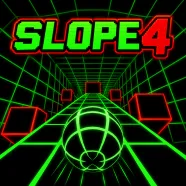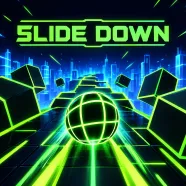







Slide Down is a vertical arcade runner where you race downward past saws, spikes, and blocks, shifting between walls to survive the endless fall.
Gravity never gives you a break in Slide Down. Your character is locked into a rapid descent along towering vertical walls, with dangerous obstacles appearing directly in the path ahead. Saws, spikes, and solid blocks turn the downward journey into a constant escape act.
The unusual vertical layout changes the way you read the screen. The danger is always approaching from below, while the increasing speed leaves less time to decide where to move. One bad shift can end the entire run.
DOWN IS THE ONLY DIRECTION
Horizontal runners usually give you a sense of where you are going. Slide Down removes that comfort. The character keeps falling, and your job is to find enough space between hazards before the next section reaches you.
The deeper the descent goes, the faster the action becomes. Narrow openings demand careful movement, while groups of obstacles can force several direction changes in quick succession. Survival depends on reading the route early instead of waiting until danger is right beside you.
Finding Space Between the Hazards
- Left Arrow / A: Shift toward the left.
- Right Arrow / D: Shift toward the right.
- Mobile: Tap or swipe left or right.
The Lower Screen Holds the Answers
The character is not the only thing worth watching. The lower part of the screen reveals the upcoming route and gives you precious time to decide which side offers more space.
A flexible position is usually more useful than hugging one wall. Open space on both sides creates an escape route when a saw suddenly blocks your current path. Short taps also make it easier to fine-tune movement during the fastest sections.
Survival Comes Before Distance
Long runs require more than fast reactions. Good positioning can prevent situations where a last-second dodge becomes necessary.
- Look ahead: Upcoming obstacles deserve attention before they reach the character.
- Leave room on both sides: Central positioning can provide more escape options.
- Favor short movements: Small adjustments offer better control than long directional holds.
- Expect the pace to change: Deeper sections leave less time for corrections.
- Learn from failed runs: Familiar obstacle patterns can become easier to handle with practice.